Biodiversity Net Gain (BNG) is an approach to development and land management that ensures projects leave the natural environment in a measurably better state than beforehand. As a fundamental part of the IUCN Nature-based Solutions (NbS) definition, projects should deliver clear improvements in biodiversity. Within ResiRiver, partners explored how to measure biodiversity outcomes explicitly and quantitatively across pilot sites.
Applying the metric
Because no suitable methodology was available in the partner countries, we examined the UK DEFRA Statutory Biodiversity Metric, which was developed to support the UK's requirement for a 10% biodiversity net gain in spatial planning and development projects. The metric was adapted to the ResiRiver context to assess its applicability and transferability beyond the UK, and to evaluate its effectiveness in demonstrating the biodiversity benefits of the planned interventions.
Adaptation for two pilots
We adapted the UK DEFRA Biodiversity Metric to a different (Dutch) context by aligning habitat classifications and testing it at two of our pilot sites in the Netherlands. The first pilot was the blue green Wantij development project in the city of Dordrecht and the second was the ecological riverbank creation at Kuipersveer; a planned ecological riverbank project along the old Meuse. We were assisted by ecologists from IUCN. Using habitat data such as quality, size, distinctiveness, and strategic significance, the tool expressed quantitative results in changes of biodiversity units.
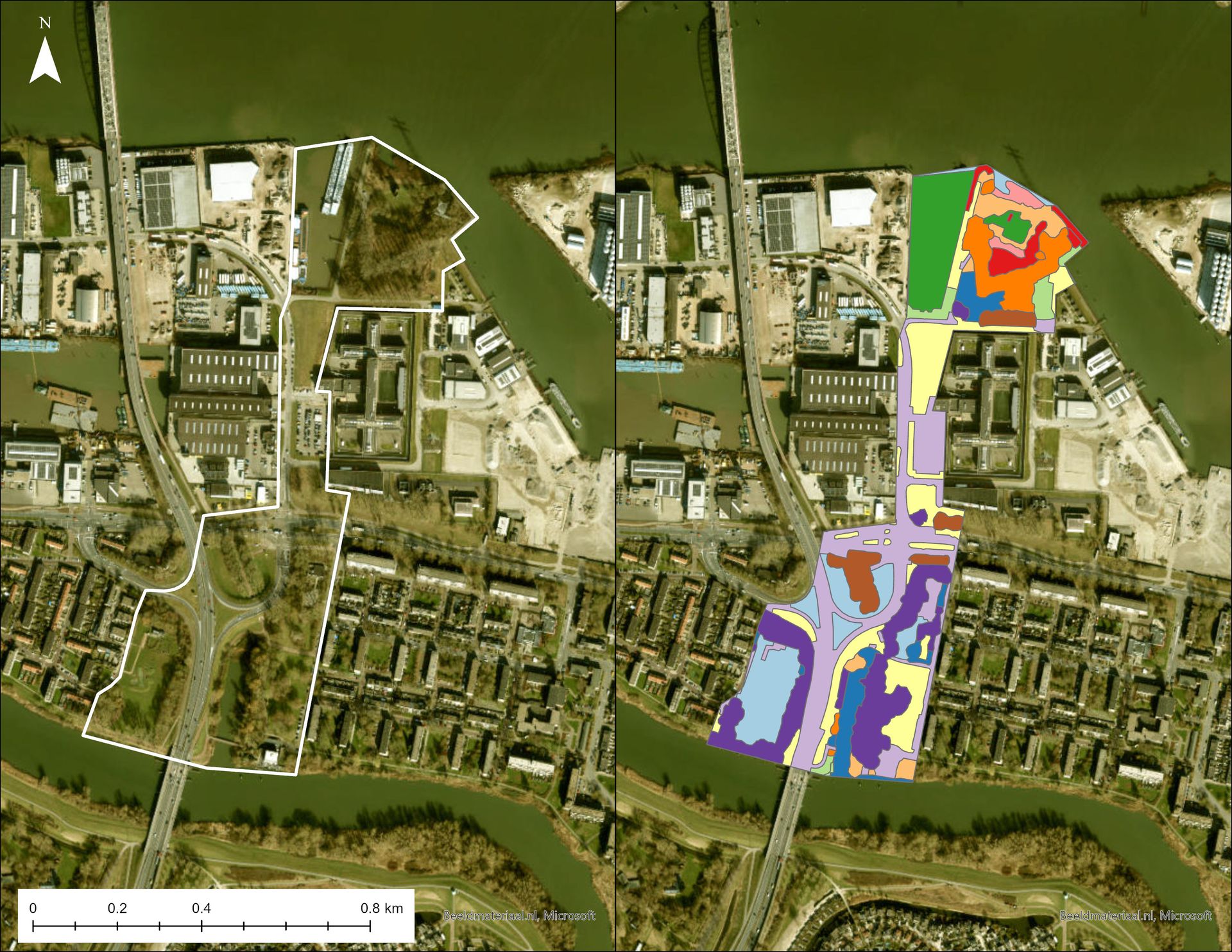
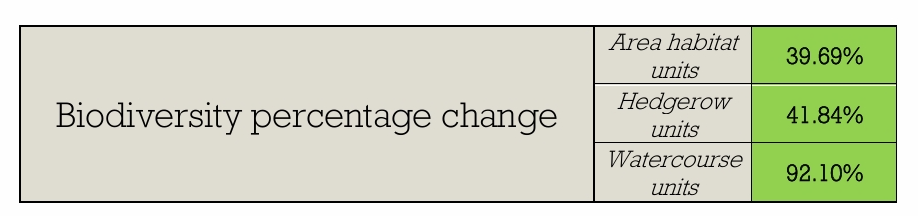
Both pilots showed a significant increase in biodiversity with the planned interventions. However, the current analysis was purely based on existing knowledge and data. Field surveys and long-term monitoring remain essential to determine whether BNG is actually achieved and if future adaptations are needed to secure the biodiversity improvement.
Transferring the methodology
We successfully applied the DEFRA Biodiversity Metric to two of our ResiRiver pilots. This demonstrated that the methodology is transferable to other countries, particularly its ability to generate standardized before-and-after comparisons. The tool supports planning and adaptive monitoring over time, which is in line with the NbS character of the pilots. Its successful use depends on investing in field validation, refinement of habitat classification, and calibration to local ecological conditions.
ResiRiver is now extending the approach to three additional pilot sites:
• Stranooden Source Protection in Ireland
• Thérouanne in France.
Additionally, we are exploring the use of the European EUNIS habitat classification to improve comparability with a similar ‘new’ metric tool. Following our ‘learning by doing’ principle, ResiRiver will disseminate all lessons learned through a practical guidance document, helping future project organisations make biodiversity impacts more explicit and measurable. With this, we are able to secure one of the main pillars of the NbS principle: providing biodiversity benefits.