
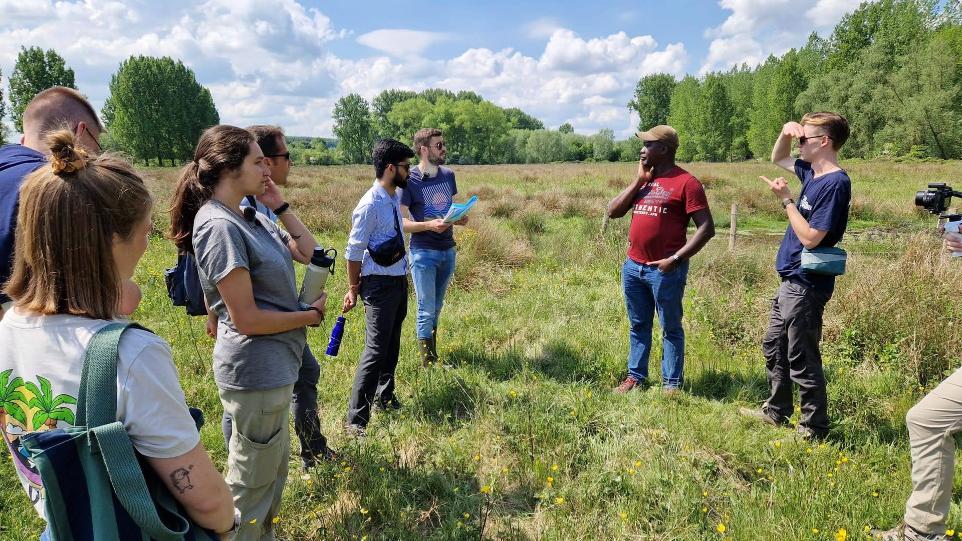
One goal, multiple teams
Within ResiRiver, we work as a team. And even though we share the same goal, we all have our own focus and specialties. The project is divided into three so-called ‘work packages’ and a Science Team. Each work package has a very specific goal, along with one or two leaders who coordinate the progress. Within a work package, multiple partners collaborate, exchanging information and sharing knowledge. This structure helps us focus on details and tackle our goals more effectively.
We are excited to introduce you to our work packages and Science Team!
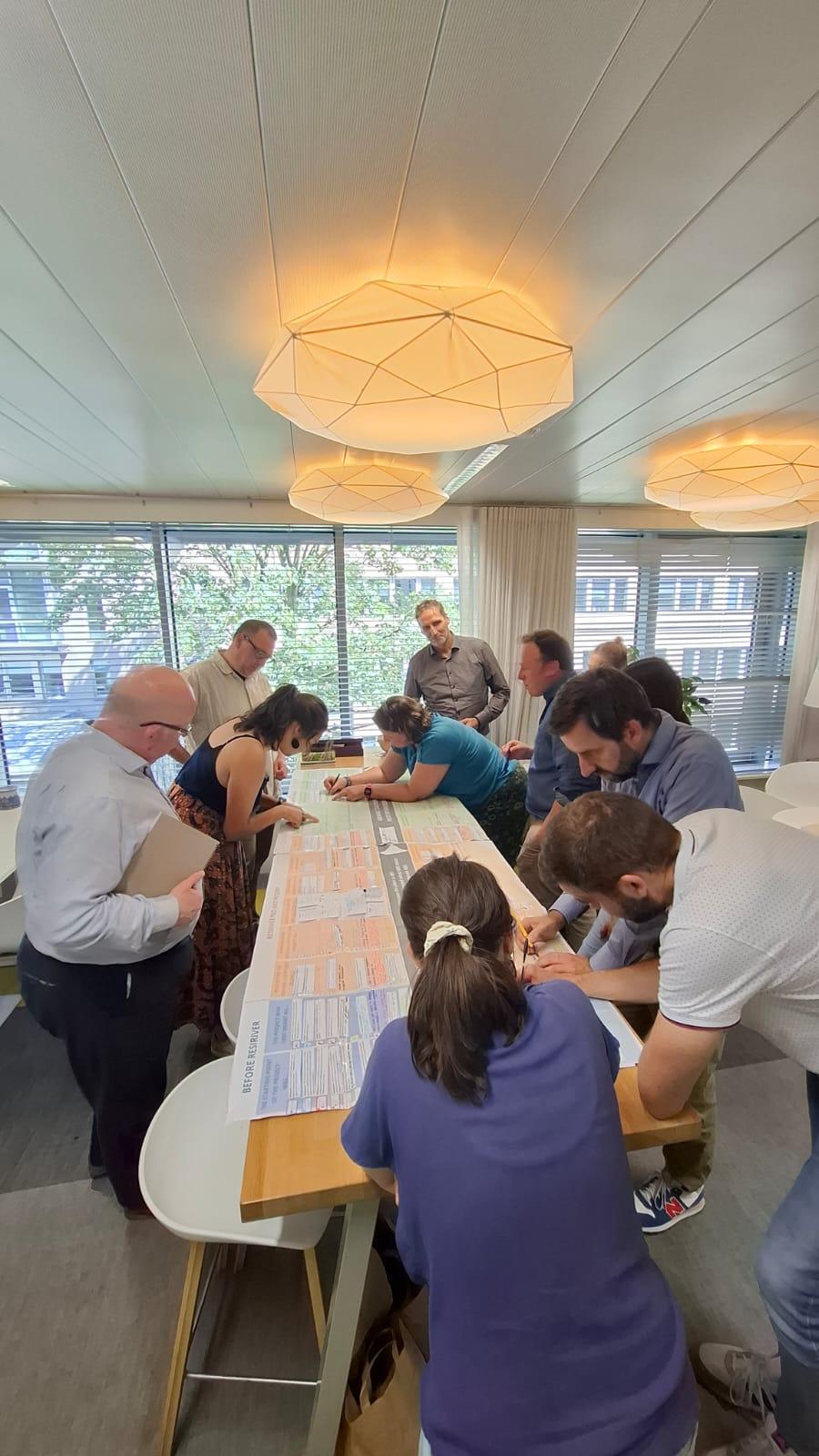
Work package 1
Our work package is a very operational sub-project that will yield on the ground infrastructures. We want to prove that implementing Nature-based Solutions is as feasible as implementing grey infrastructures. It also has the bonus of combining several programs for the same cost. We want to find methods to follow the ‘Nature-based Solutions compass’ by testing it in various pilots, each owned by a different partner. To do this, we need to understand the unique context and process of every pilot and then assess their outcomes for future practices.
Sarah Duverney: “I love interacting with other project owners and realising that, despite our many differences, we face the same challenges.”
The biggest challenges are learning to work together on our mainstreaming pilots and finding effective ways to share the details and lessons from these pilots. Each pilot has its strengths and weaknesses. By learning from each other’s mistakes, we can help reduce them and strengthen our project as a whole. It is tempting to work with a local team in your own department and build the pilot as quickly as possible, but that is not the point of Interreg. We improve our pilots through peer help and ResiRiver tools.
Yoann Le Savouroux: “The more we work together, the more solutions we discover.”
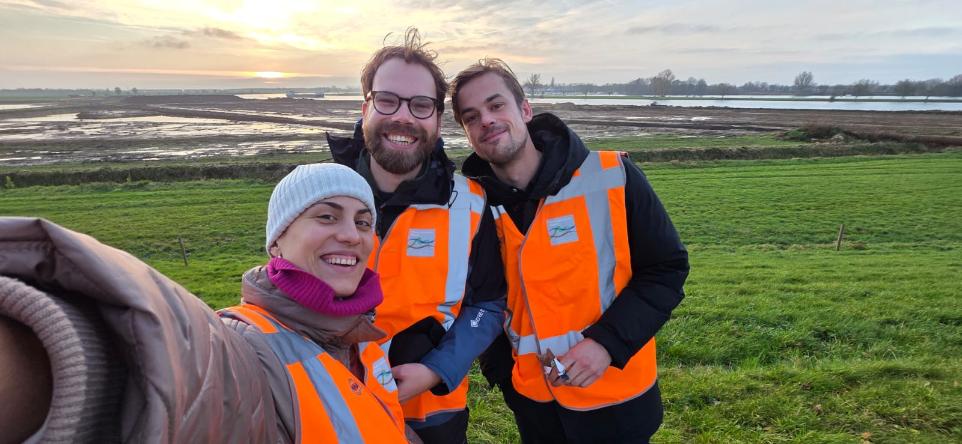
Work package 2
Our work package functions as the backbone for learning. It addresses the systemic issues that hinder NbS implementation, such as challenges related to decision-making, financing, and engineering. Based on the identified learning needs of the project partners and their networks, we aim to develop a training program and learning platform.
Lodewijk Schulte: “I like the challenge of extracting broadly applicable knowledge from our practical NbS pilots and embedding it into our training modules. Through these learnings, NbS practitioners can truly benefit from the work that has already been done.”
Our goal is to provide organisations and professionals with the capacity needed to embed NbS principles into their policies, procedures, and daily practice. The biggest challenge? Aligning learning activities with diverse target audiences and translating complex knowledge into accessible insights.
Jan den Daas: “We have learned that proving the effectiveness of NbS using hard data is crucial, and highly effective in convincing decision-makers.”
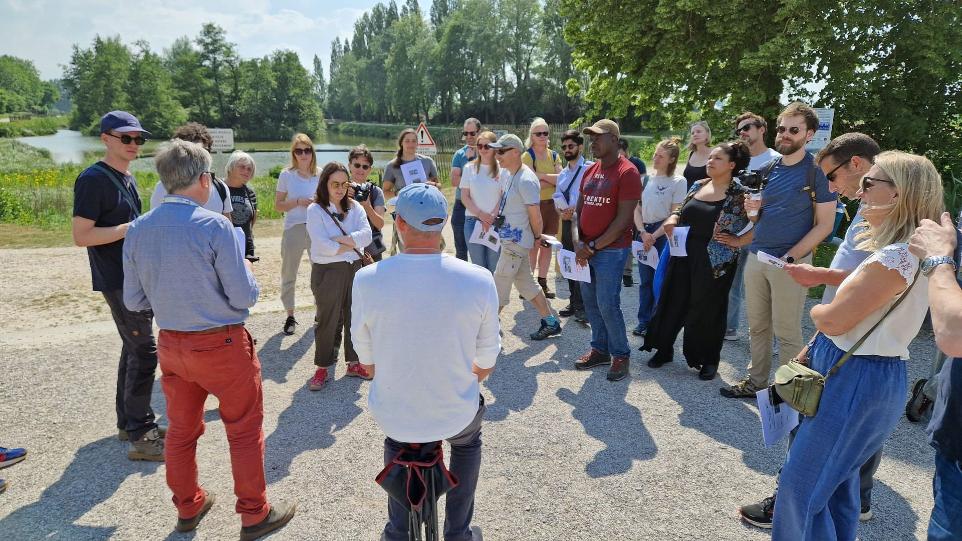
Work package 3
Our work package is exciting because it is perhaps the most challenging one: we want to achieve that Nature-based Solutions become the standard. Not only do we want to anchor them into our everyday planning processes, but we also aim to highlight the amazing possibilities they bring. We get to combine traditional, nature-based construction methods with modern planning instruments.
Silke Schreier: “We know more than we thought.”
However, there are also societal challenges, such as: how can we use Nature-based Solutions to encourage both organisations and communities to rethink their approach to climate mitigation? There is only one way to approach that question: piece by piece. Innovation takes time and old habits die hard. Convincing people to change their trusted ways for a greener future is an uphill battle, but one surely worth fighting.
Melanie Schulz: “It is exciting to rethink and hopefully revolutionize the first approach to building along our European rivers!”
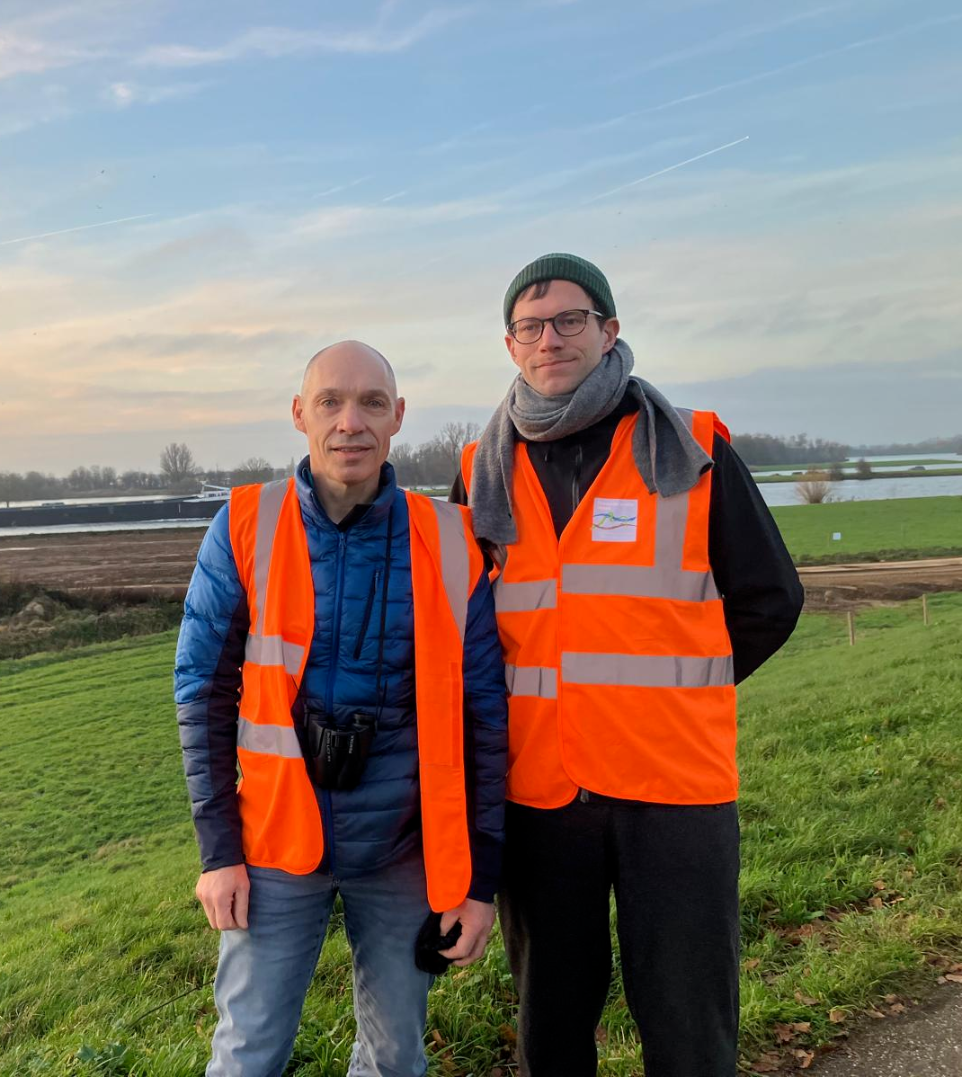
Science Team
The task of the Science Team is to provide the ResiRiver project and its work packages with the necessary scientific foundation and to assist them throughout the process. We aim to establish definitions, conceptualize the context, and publish this work in scientific journals. In our view, a Science Team is essential to bring together the different elements of the project.
Geert van der Meulen: “We both have an affinity for research. The Science Team allows us to regard ResiRiver as a very comprehensive research project due to its case studies and the involvement of many prominent river management authorities.”
We ensure that the concepts developed within the work packages are sound and can genuinely serve as inspiration for other projects. One of the obstacles in applying NbS is the perceived lack of scientific evidence. It is difficult to get a hold of the right models and concepts that support our theory on mainstreaming. We work hard to contribute to this, demonstrating that NbS works!
Ralph Schielen: “We want to help the work packages achieve their goals, whether that means advancing the pilots, improving communication tools, or contributing to the organizational changes needed to truly mainstream NbS.”
Not only do we report our findings in the literature and at conferences, but we also keep track of developments in the wider field of mainstreaming and upscaling NbS and bring those insights back to ResiRiver. This is not easy: the world of NbS is vast, making it nearly impossible to follow everything. Slowly but steadily, we gather tools, adapt and expand them, and test them within the ResiRiver context. We hope this contributes to addressing one of the major challenges in applying NbS: building scientific evidence.